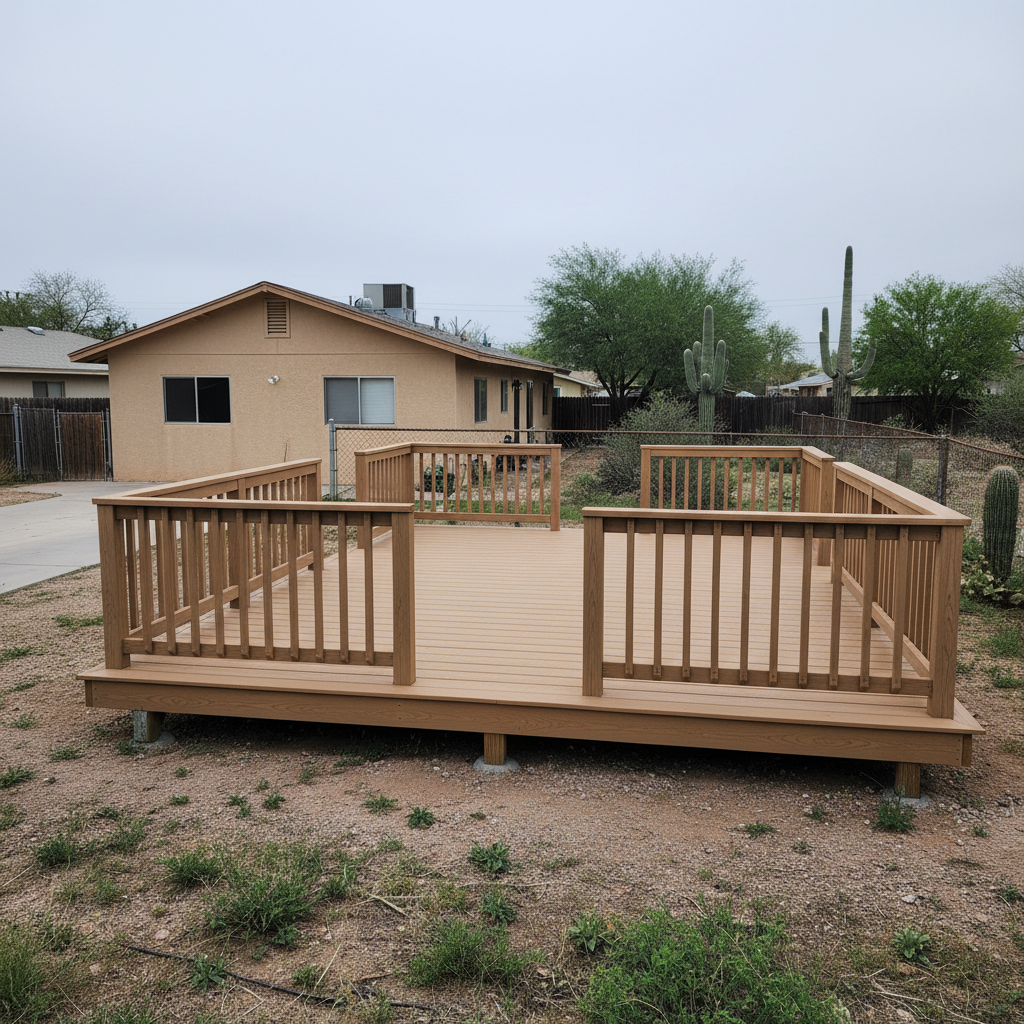
Oro Valley has a particular kind of ground, a particular kind of sun, and a particular kind of homeowners association, and all three of those things show up in how a deck gets built here, not just whether it gets built. Picking a contractor isn't only about who has the nicest portfolio photos. It's about who's actually dealt with what's under your yard.
Start with the license, not the portfolio
Any contractor building a deck in Arizona for pay needs a Registrar of Contractors license. Ask for the ROC number and look it up yourself, it takes two minutes and it shows you complaint history, bond status, and whether the license is even current. A lot of homeowners skip this step because the person showed up on time and seemed nice. Nice doesn't cover you if a ledger board pulls off the house in a monsoon downpour and someone's standing under it.
Ask for proof of general liability insurance too, and ask if their crew carries workers' comp. If a guy falls off a second-story deck frame on your property and there's no coverage, that liability can land on you as the homeowner. Get the certificate, not just a verbal yes.
The ground here isn't like other places
Oro Valley sits on soil that's often got a caliche layer somewhere between one and three feet down, a cemented calcium carbonate crust that's basically soft rock. A footing crew that's used to digging in regular dirt will hit that layer and either not go deep enough or not know what they're looking at. Footings here typically need to go 12 to 18 inches, sometimes more depending on the structure and what the caliche does at that depth. If a contractor doesn't mention caliche at all during the estimate, ask them directly how they plan to deal with it. If they look confused, that's your answer.
Caliche also doesn't drain. Water sits on top of it instead of soaking through, which matters a lot once monsoon season hits in July through September. A deck built without thought for where that runoff goes can end up with standing water pooling under the frame, which rots ledger connections and rusts fasteners faster than you'd expect in a desert. A builder who knows the area will grade and flash for that before it's a problem, not after.
Permits, inspections, and your HOA
The Town of Oro Valley requires a building permit for most deck construction, and that typically means an inspection of the footings before concrete goes in, a framing inspection, and a final inspection before you're cleared to use it. If a contractor tells you a permit isn't necessary for your project, get that in writing, and then double check with the town yourself. Unpermitted decking work is one of the most common issues that surfaces when a house goes to sell, and it's the buyer's inspector who finds it, not you.
A lot of Oro Valley neighborhoods, Rancho Vistoso and Stone Canyon among them, have active HOAs with architectural review committees. That approval usually has to happen before the town permit, not after, and it can add a couple weeks to your timeline. A builder who's worked in these subdivisions before will know to submit for HOA review early instead of treating it as an afterthought once material's already ordered.
Materials that actually hold up to this climate
Summer temperature swings here can run from the high 70s overnight to 105 or more by afternoon, and that kind of daily expansion and contraction is hard on decking material. Composite boards handle UV better than most wood but they still expand and contract along their length, so spacing at installation matters, usually a gap of around 1/4 inch between boards depending on the product and the temperature on install day. A crew that installs composite tight in the cool morning without accounting for afternoon expansion will end up with buckled boards within a year.
Western red cedar and redwood look great in the showroom but take a beating from UV exposure here if they're not stained and sealed on a real schedule, something closer to every one to two years rather than the five-year interval that works in milder climates. If a contractor pushes a wood species without mentioning maintenance at all, they're selling you the sale, not the deck five years from now.
Fasteners matter more than people think. Galvanized screws corrode faster in the dust and heat cycling here than stainless, especially near any irrigation or runoff path. A good builder uses stainless or coated fasteners rated for the exposure, not whatever's cheapest at the yard that week.
What the contract and timeline should tell you
A straightforward deck, say a single-level attached deck around 300 to 400 square feet, usually runs two to four weeks from permit approval to final inspection, weather and material lead times allowing. Multi-level decks or anything with a pergola or custom railing work takes longer. If someone quotes you a week for something that size, ask what's getting skipped.
On payment, a deposit of 10 to 30 percent to cover material ordering is normal. Anyone asking for half or more up front, or asking for the full amount before work starts, is a flag. Get a written contract that spells out the scope, the material brand and grade, the payment schedule tied to milestones, and who's pulling the permit. Verbal agreements and handshake deals are how homeowners end up arguing about what was actually promised once the invoice shows up.
Ask to see a completed deck in person if you can, not just photos. Photos hide gaps in flashing and sloppy fastener patterns. A deck that's a year or two old will also tell you how the boards and railing are holding up to an Arizona summer, which is the real test.
If you're weighing bids right now, it's worth asking each contractor how they'd handle your specific lot, the slope, the soil, the HOA, rather than accepting a generic quote. That's a decent filter on its own. You can see how Pinnacle Deck Inc approaches that kind of walkthrough if you want a sense of what the conversation should sound like.